
Some of you may want closure on the story of the robin nest in my garden (see my previous post for part one). There’s some sadness but a happy ending. On May 29 I found the mother robin dead about 20 feet from the nest with no visible injuries. With a lump in my throat, I buried her and watched anxiously to see what the father would do. Would he continue to feed the nestlings or abandon them? Was he capable of protecting them as well as going out to gather the hundreds of insects they would need before they could fledge?
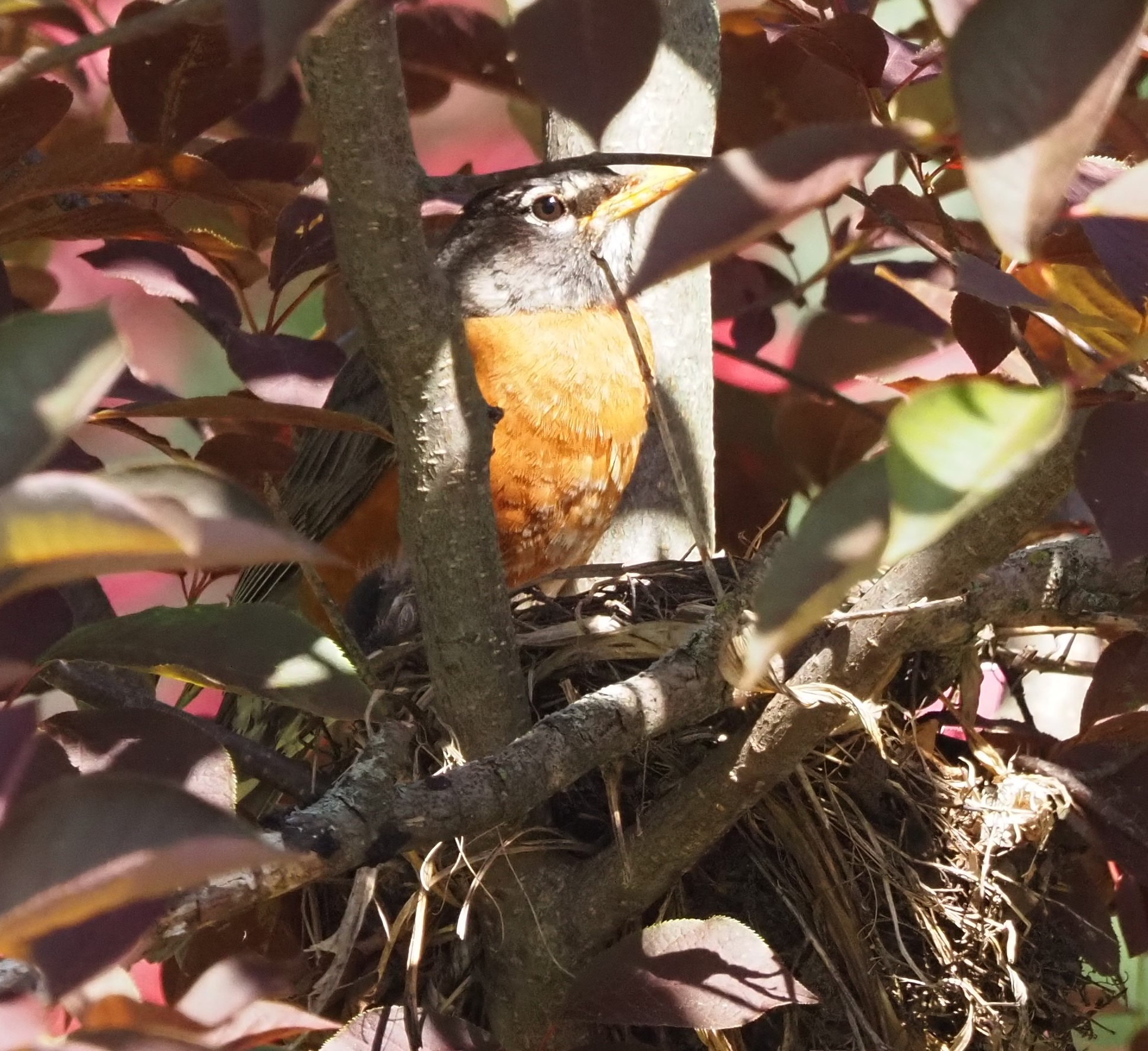
All that day he seemed confused and spent a lot of time standing on the edge of the nest as if waiting for her to return. I didn’t see him feed the babies for a few hours and was getting very worried about their chances for survival. I decided to give him a hand, and went quickly to buy some live mealworms to help him feed them. Since I figured they might fledge in a few days, I got a container of 500 worms. I placed a couple spoonfuls of them on a terracotta saucer about 10 feet from the nest and was elated when he finally found them and started taking them to the babies. I refilled it and he took them again, and by the end of the day those 500 worms were almost gone! And I was watching nonstop to make sure nobody else was coming in to get them. He developed a routine of eating a few worms for himself and then loading his beak up and going right back to the nest where those babies were ravenous.
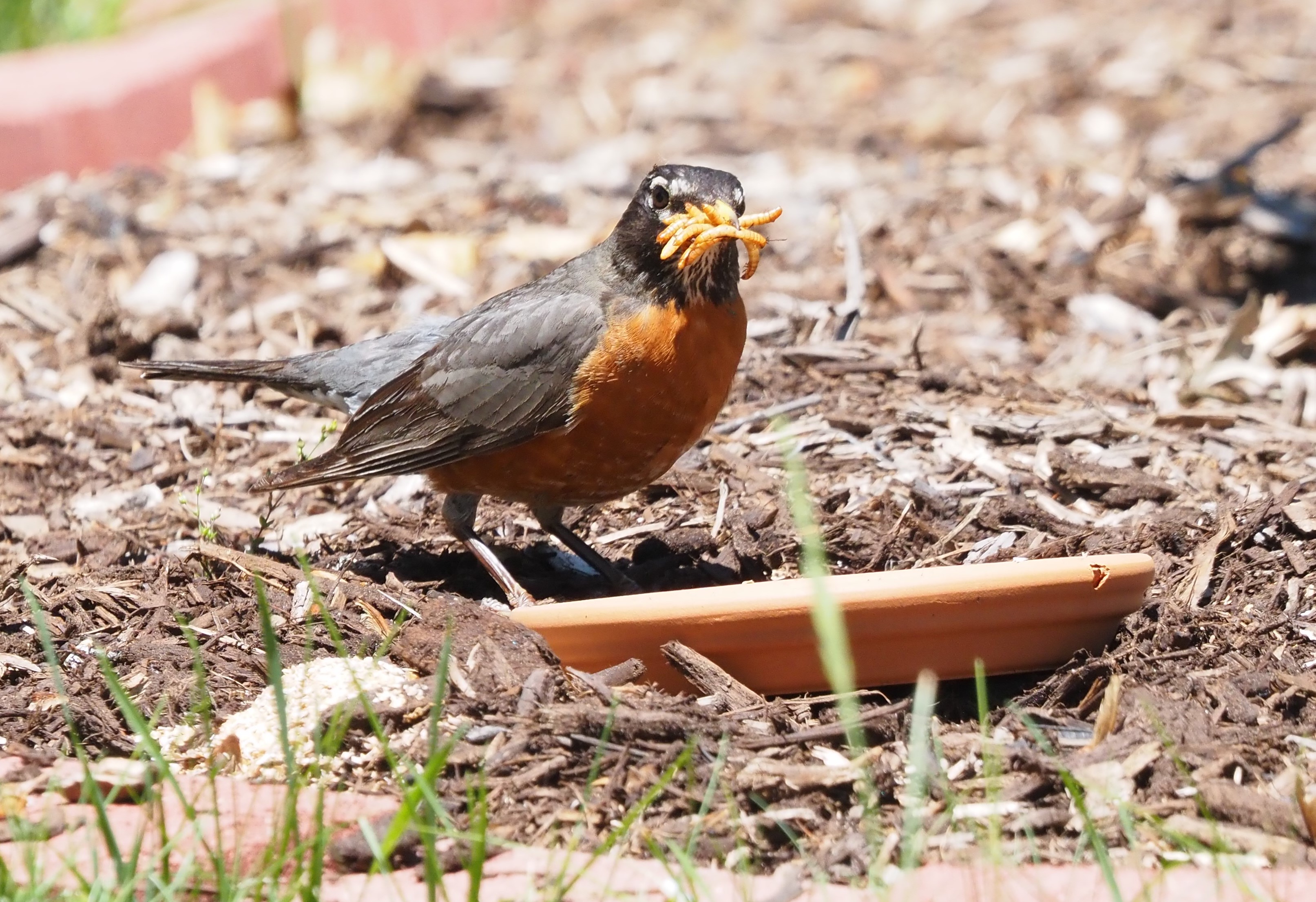
I was so glad to see that he wasn’t going to abandon them. But his job involved more than just feeding them; the house sparrows seemed to know that the babies were unguarded, and they began coming into the tree, very near to the nest, as if testing to see how close they could get. House sparrows will kill baby birds if they get half a chance; they’re very aggressive. I wish I could prevent those violent and noisy invasive birds from coming into my yard at all. But I digress. I’m happy to report that daddy robin kept a close eye on his kids and chased those sparrows out multiple times that first day. But I was really worried about whether I’d find them dead in the morning. But they survived and kept getting bigger and stronger. I went back to the store to get a larger container of mealworms, a thousand of them the second time. And the robin got so accustomed to me helping him that he’d stand beside the empty dish and look toward the house as if he was willing me to do my job better. When I went out with more worms, he would stand beside the dish until I got about six feet away, then he’d hop away a short distance and wait. Often he’d be back at the dish before I even got into the house.
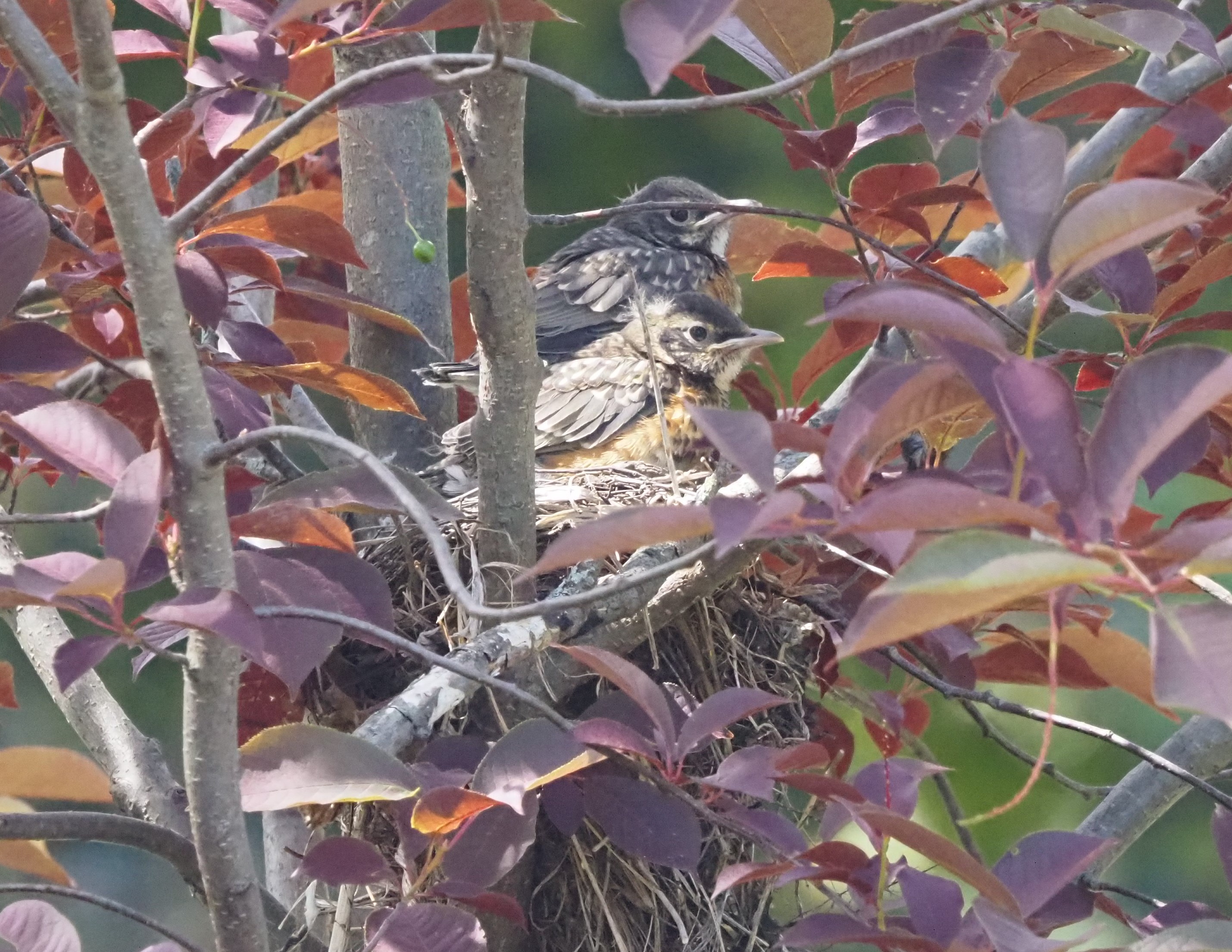
I tried to portion the worms out slowly so I wouldn’t have to buy more before they fledged from the nest (they’re expensive — $40 for those two containers!). On the evening of June 2 I took photos and videos to document their progress, thinking that they would fledge the next morning. I’m a night owl and late sleeper though, and I didn’t check the nest until 9:00 am and they were already gone! I searched the yard, expecting to find the nearly-flightless birds somewhere being fed in the grass by their father. But nada. No evidence of anything in the nest, no evidence that they’d been attacked, nothing. Since I still had some mealworms left, I kept putting them out. Early in the afternoon the father came back, filled his beak with worms, and flew over the fence into the neighbor’s yard. I doubted that those babies could have flown over the 6-foot fence on day one, but then I realized that they could have easily hopped between the boards at ground level. The father came back and forth taking worms until I ran out at the end of that day.
I can’t be positive that those babies survived, but I sure was relieved to be done with the constant monitoring and worrying about them. They began building the nest on May 1, so it took 32 days from that point to lay eggs, incubate them, and then feed those fast-growing babies. (Whew, I’m exhausted.) I was impressed with the devotion of the daddy robin and so glad I got to be a part of this bird family’s story. Happy Father’s Day, in memory of my sweet dad.
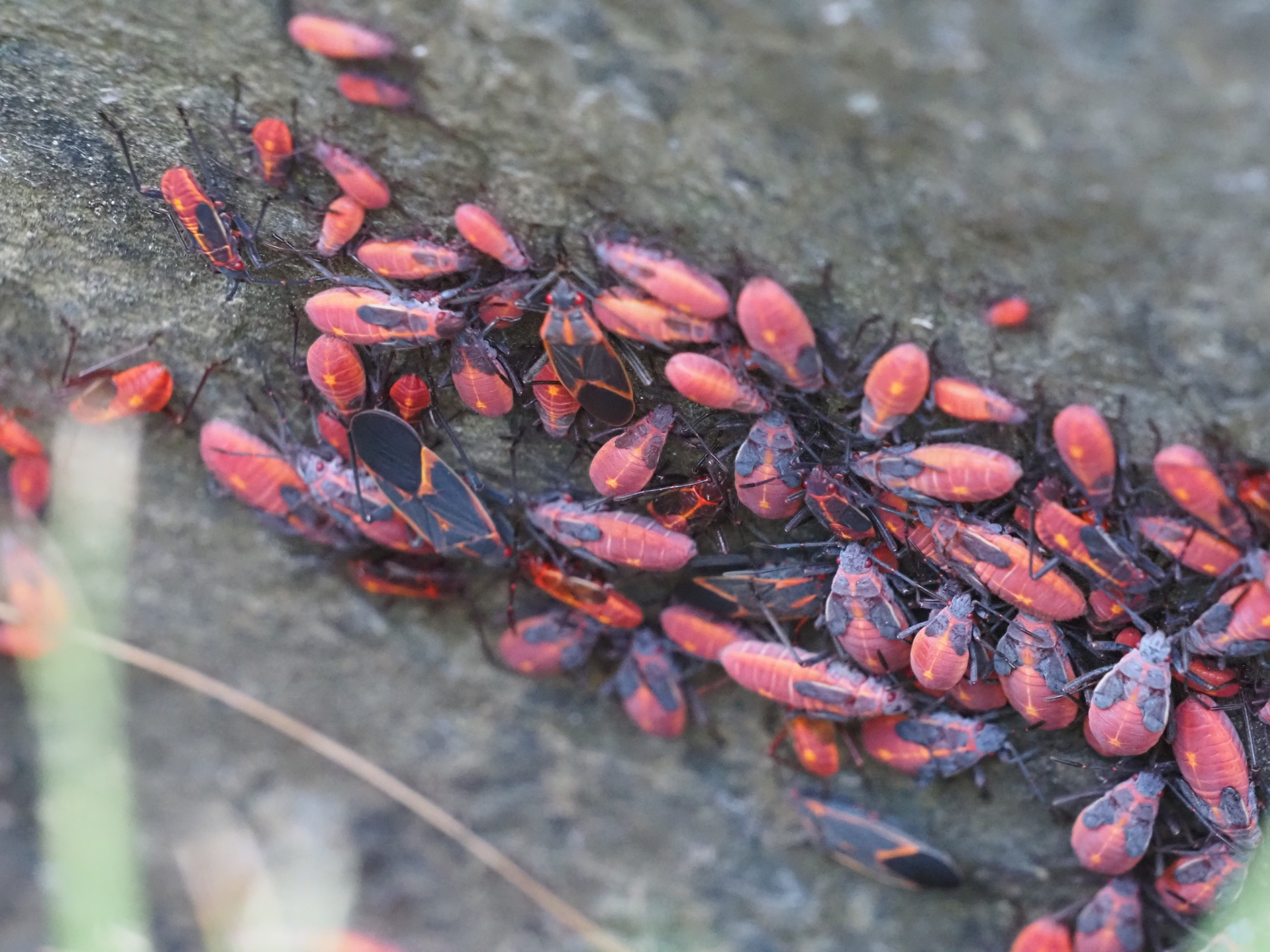
So what else is happening in the garden? Maybe my perceptions are off, but it really seems that the plants and insects are taking longer than usual to get started this year. The most obvious insects in the yard for the entire month of June have been the boxelder bugs, who are here in the thousands and driving me nuts. Every time I try to do any weeding or planting, I get bugs crawling up my arms and legs immediately. I love watching and learning about bugs, but don’t particularly enjoy having them all over me. I don’t remember ever having an explosion of this species before, but have read that their populations are cyclical.
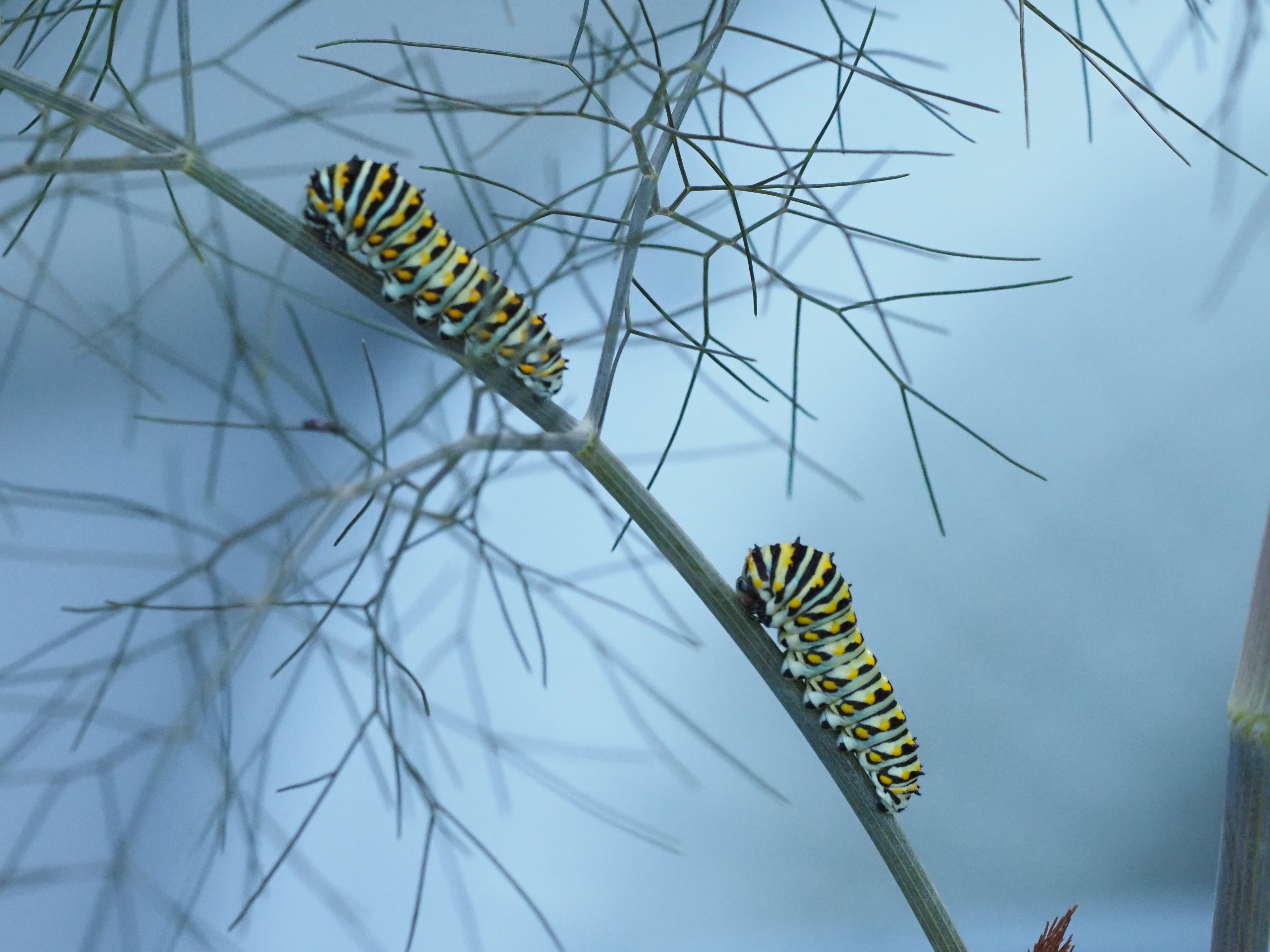
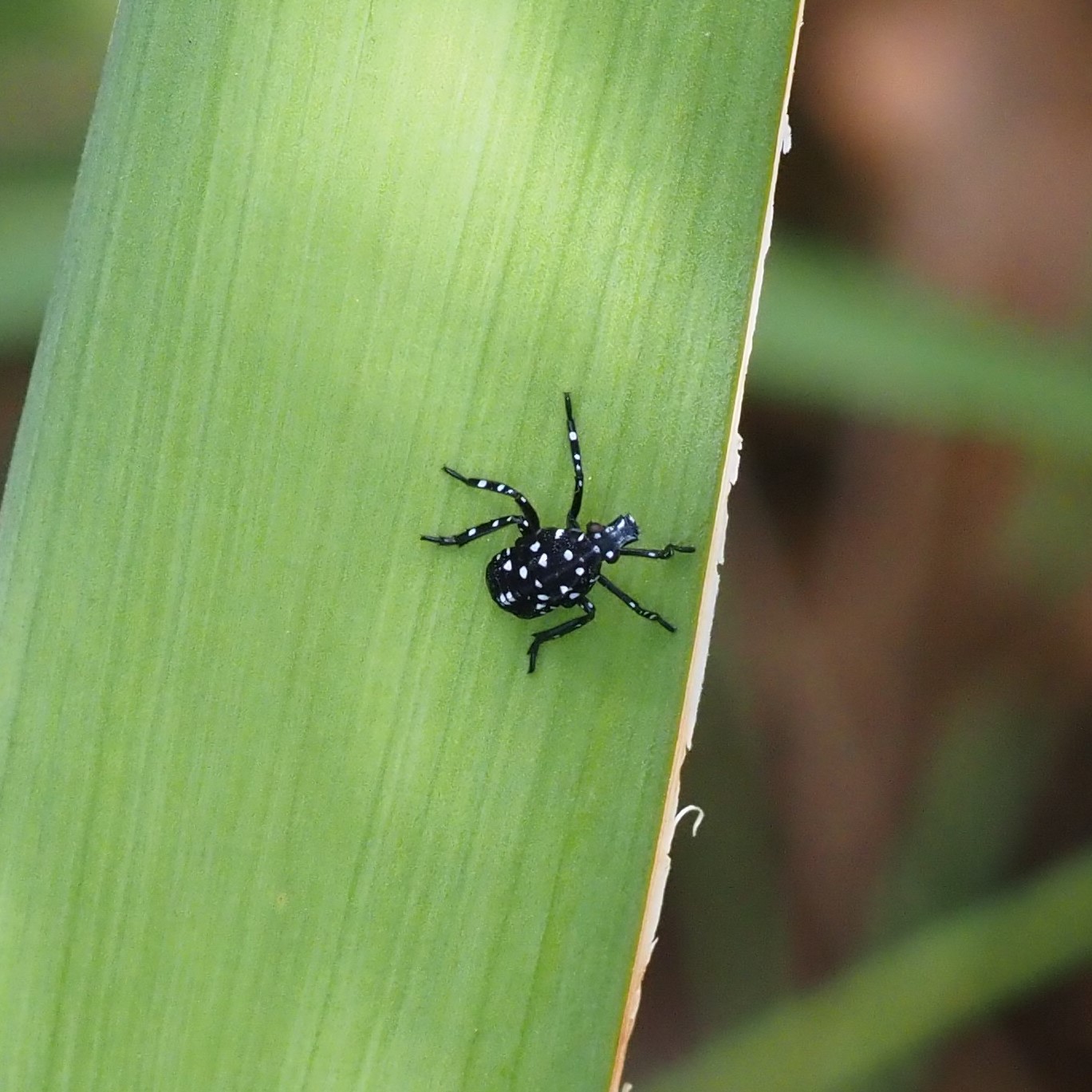
I spent a bit of time wandering around with my camera today and things are definitely starting to pick up; I photographed a dozen species of insects. I haven’t seen many butterflies yet this year but found four black swallowtail caterpillars in the fennel. Unfortunately, the spotted lanternflies are still here too. Right now we have early instar nymphs; the adults appear later in the year, beginning in July. The Ohio Department of Agriculture encourages us to kill them whenever possible because they’re a threat to crops, especially grapes and apples. (Did you know that Ohio has a $6 billion wine industry?) Despite the name “lanternfly,” these insects are leafhoppers, not flies. And that means that when you try to stomp on or squish one, they’re gone before you can even think about catching them. I’ve seen them leap tall buildings in a single bound. Um, I mean ten feet, but still impressive.
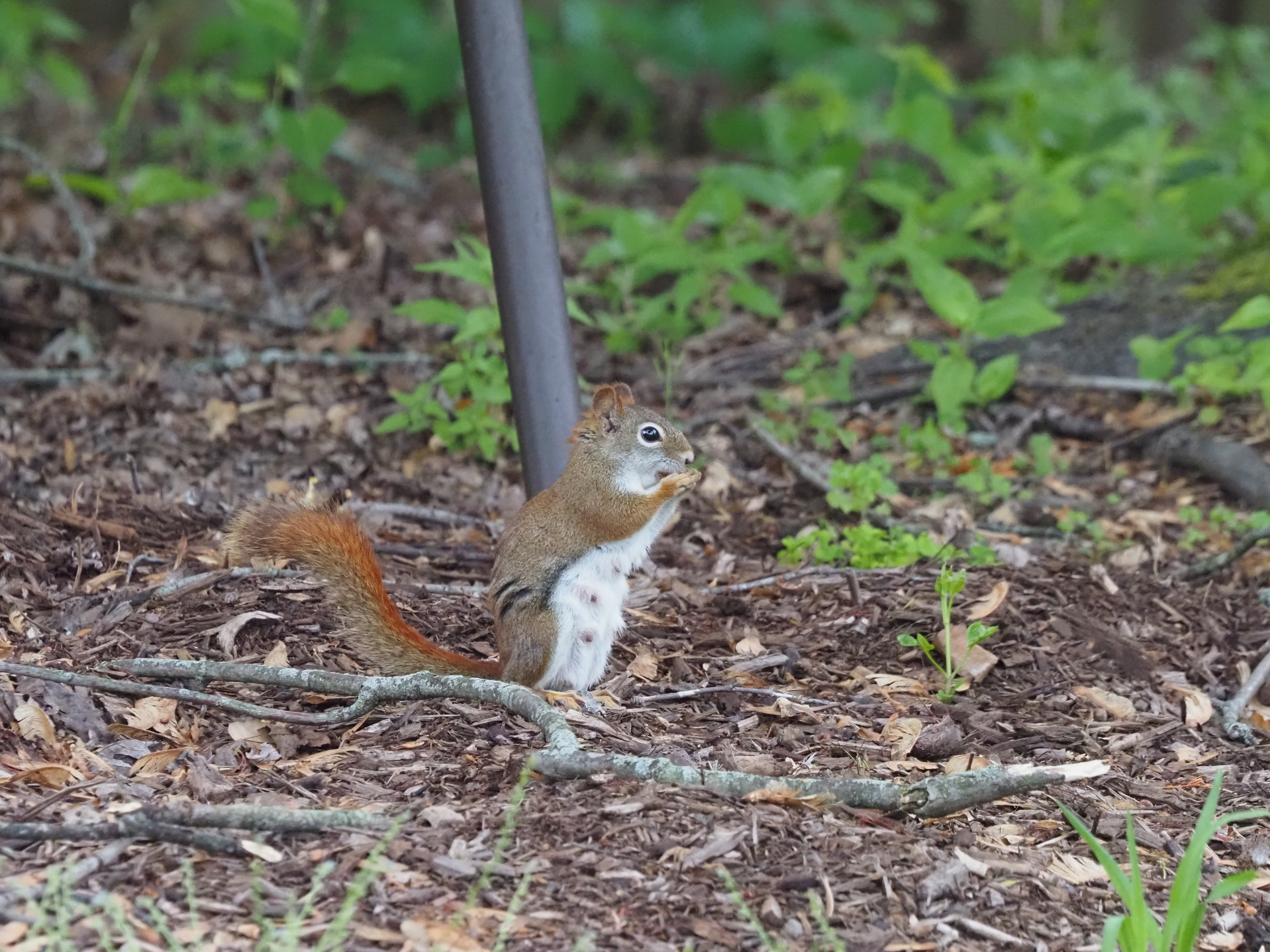
Now, for those of you who don’t love the bugs as I do, here are a couple cute mammals to make up for the pic of the boxelder bugs. I love these red squirrels; they’re so much tinier than the more common fox squirrels, and they run across the fence and power lines as if they’re in a race for their lives. And I suppose they are, because those are places where they’re more exposed as they use them as highways between areas of safer cover.
Rabbits live here too, and one day I caught two of them feeding and relaxing together.
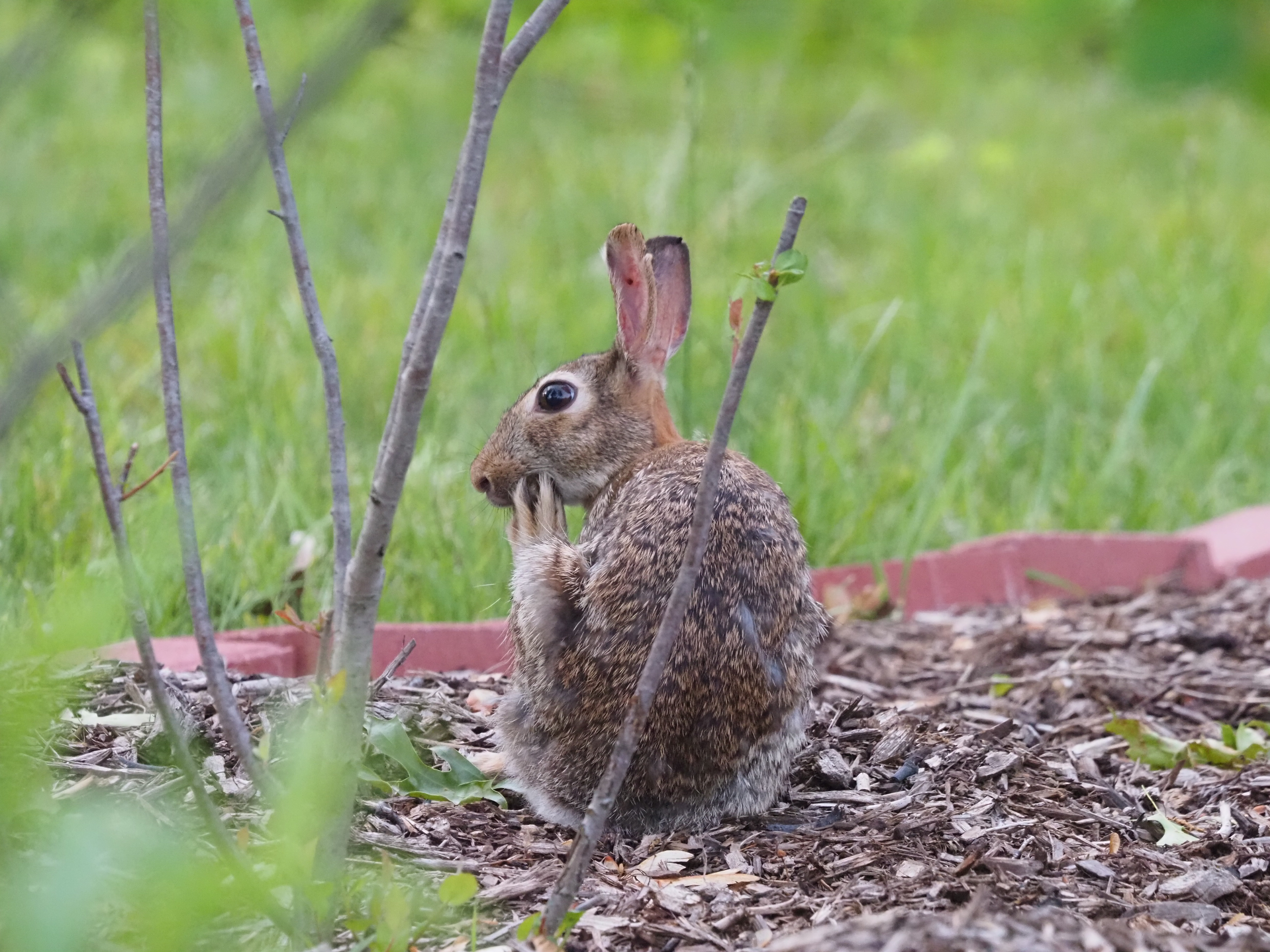
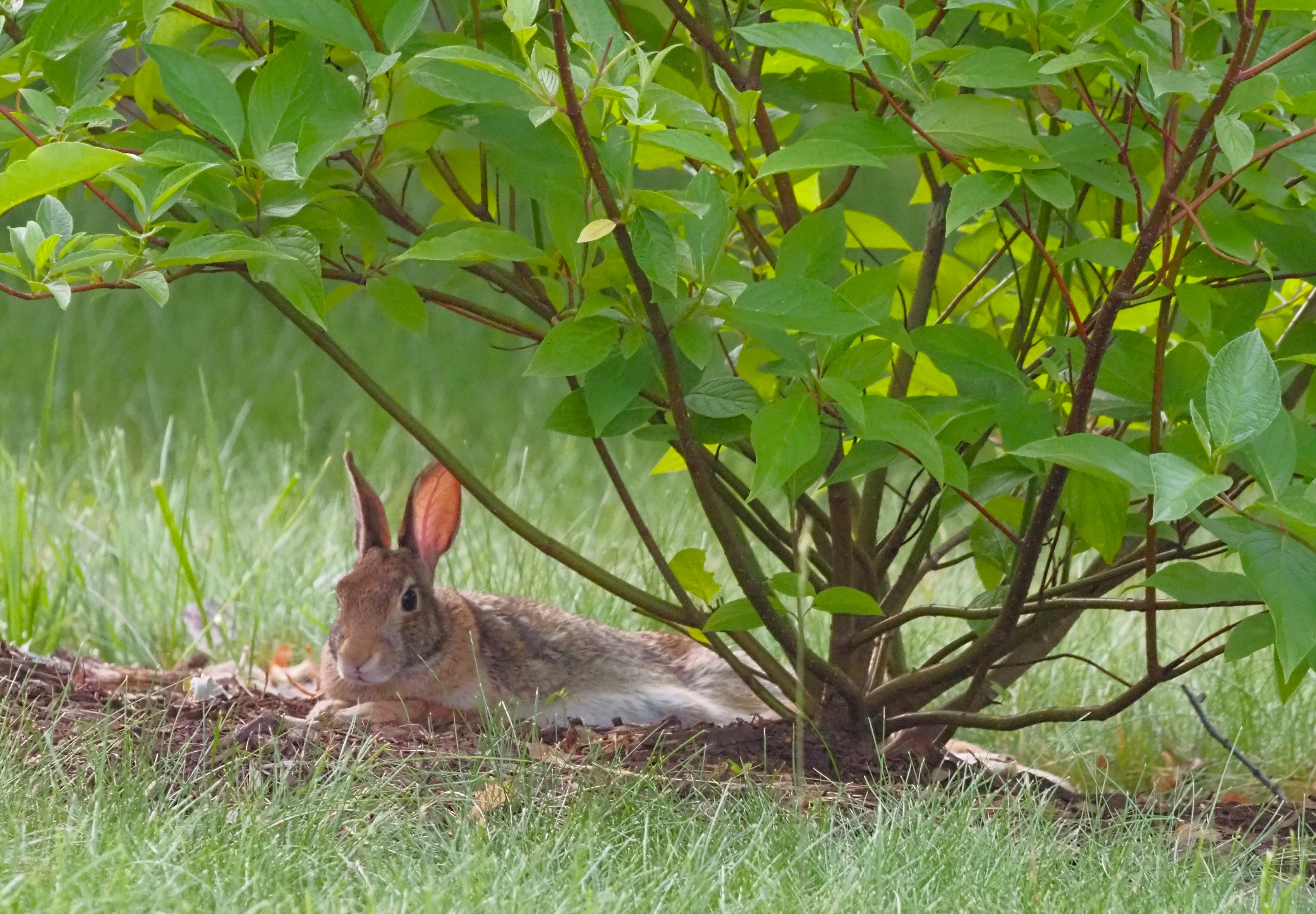
It makes me happy to see that they feel safe here. Thanks for reading.
I once had a sparrow alight upon my shoulder for a moment, while I was hoeing in a village garden, and I felt that I was more distinguished by that circumstance than I should have been by any epaulet I could have worn.
― Henry David Thoreau, in Walden
 Nature is my Therapy
Love your blog and the good things you find! I’m an insect lover too, but like you said, not necessarily if crawling all over me!
LikeLiked by 1 person
Hi Sara, nice to meet a fellow bug lover! Glad you enjoy the blog. — Kim
LikeLike
Amazing story, thank you for helping the birds! Your garden is a hub of activity.
LikeLike
I love how my garden teaches me so much about the natural world every day. Thanks for taking time to leave a comment Kate.
LikeLike
Thank you Kim. Your post has brightened my afternoon. We are enjoying city life but I sure miss the wildlife. I wouldn’t have had a clue what to get for an adult Robin trying to feed their babies. Well done!!
LikeLiked by 1 person
Thanks, Ardys. So glad you liked this one! That knowledge comes from my involvement with the native gardening community and exposure to the work of entomologist Doug Tallamy.
LikeLiked by 1 person
You did a good job of mothering those chicks. What would you say was the total weight of worms they ate?
LikeLiked by 1 person
Thank you! I haven’t the faintest idea about the weight of those worms. But Dr. Doug Tallamy’s research found that a pair of chickadees needs to feed their babies somewhere between 6,000 and 9,000 caterpillars before they can leave the nest. Since robins are larger birds than chickadees, it might even be higher for this species.
LikeLiked by 1 person
I love this robin story! It’s so great that you are so attuned to what’s going on in your yard.
LikeLiked by 1 person
Thank you, Kate, I’m glad you liked it!
LikeLike
Lovely Fathers Day story.
LikeLiked by 1 person
Glad you enjoyed it, David.
LikeLike