
In my previous post I showed you a short video of a hummingbird clearwing moth (Hemaris thysbe) feeding on monarda fistulosa (bee balm) in my garden. The next day I photographed its relative, the snowberry clearwing moth (Hemaris diffinis), also feeding on monarda.
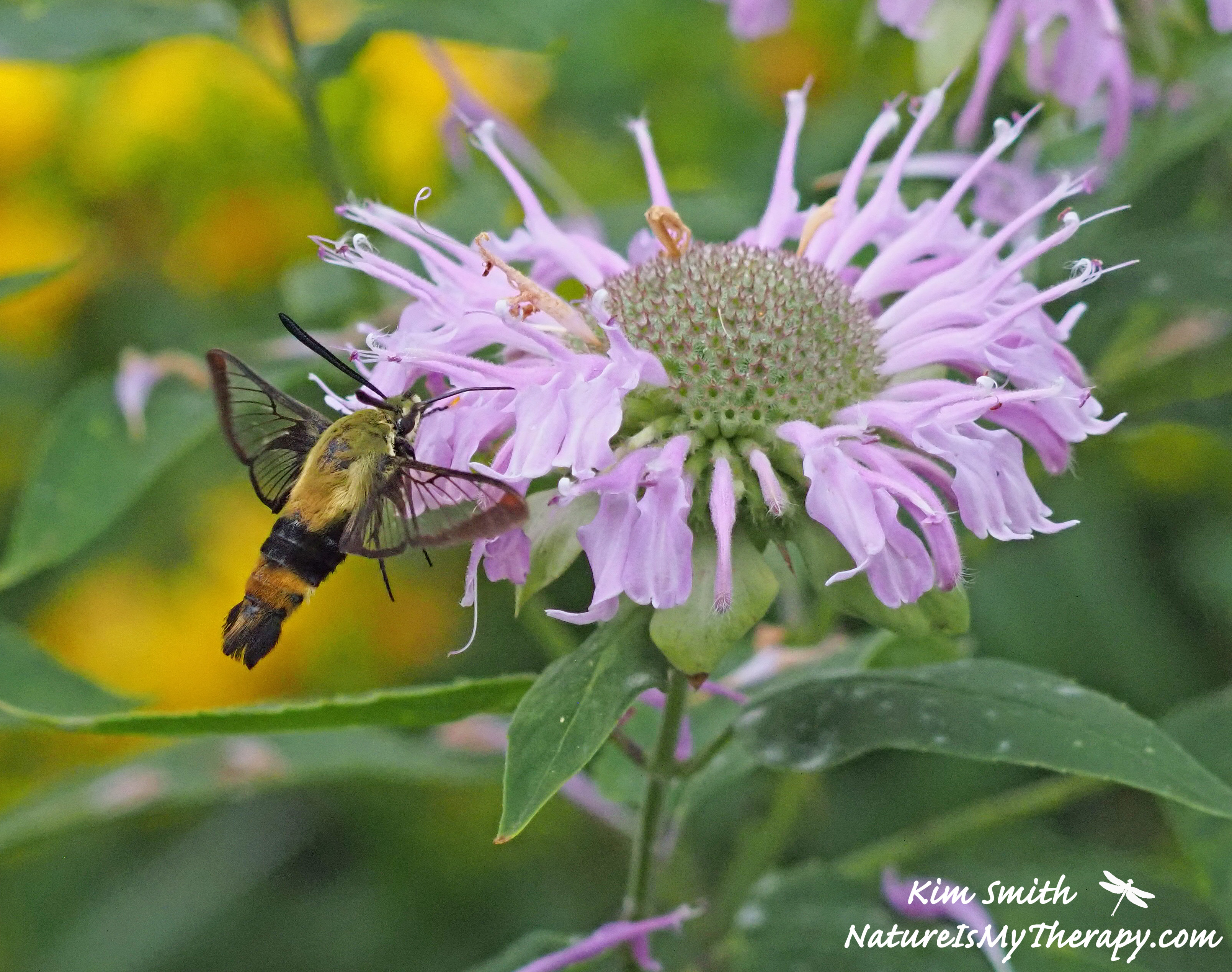
As you may notice in that photo, the snowberry clearwing is differentiated, in part, by a dark line across the side of the face and partway down the body. Now that I know both species are here, I’m trying to get photos every time so I can look closer to confirm which is which. I find it hard to see those markings in real time as the little moth is bopping around in and out of the monarda patch.

Last Saturday was my birthday and I’d planned a day of weeding and general garden cleanup, as some friends were scheduled to come see my pond on Monday and I wanted everything to look as nice as possible for their visit. In mid-morning I was out there weeding and chatting with my neighbor when she noticed a hummingbird moth flying around the nannyberry bush behind me. I was briefly confused about what it was doing, as the nannyberry has no blooms right now so it couldn’t be feeding. Suddenly it dawned on me that the nannyberry (Viburnum lentago) is one of the favored host plants for this moth species, and she was likely looking to lay eggs! How fortuitous that I’d been in that spot at that very moment, and that my friend had noticed the insect behind me. I was overjoyed, and my birthday was off to a fantastic start.
Since I’d been seeing both of these Hemaris species of moths in the garden daily, I’d done a bit of research about their host plants the day before, but hadn’t taken time to watch my nannyberry yet. It’s in the bed closest to my driveway where I don’t usually spend much time. This is the bed where I had to cut down three redbud trees and lost all the shade they had provided for the plants below them. The plants there now aren’t meant to be in full sun so I’m removing many of them; they’re mostly hostas left by the previous owners of my house, and they’re getting fried there now. I put this nannyberry in the center of the bed last spring and am eager to watch it grow to its mature size of about eight feet tall and the same width.

I continued my garden work and a little while later I checked the nannyberry again and found what I think are two eggs from the little moth.

Moths usually try to lay eggs on the undersides of leaves, but not always. From the photos I’ve found online, these could be eggs from this moth.
I immediately made a mental note to start checking this shrub with my black light each night, as the caterpillars glow bright neon green under UV lights. So that night I went out around 11:30 pm with my black light flashlight and guess what I found? Yep, a tiny caterpillar of the hummingbird clearwing moth, complete with its tiny “horn” tail. Of course, this caterpillar didn’t hatch from the eggs I’d found earlier; there must have been earlier eggs that I hadn’t noticed yet.

Here’s it’s making a u-turn, possibly in response to my camera’s flash disturbing it. I just love caterpillars with horns on their backsides!

This one was very small, maybe a quarter-inch long. And this is an early instar. This species will go through several molts, changing appearance and growing larger until it’s ready to pupate in about four weeks. At that point it will drop to the ground and form a cocoon and spend the winter in the leaf litter below the shrub. This is another reason why it’s so important to leave some leaves in your garden beds every year, so they can shelter these important pollinating insects through the winter. I’ve also noticed a big increase in lightning bugs (aka fireflies) in my yard since I began leaving lots of leaves through the winter. They’re a magical reward for very little effort. Don’t you think more people would try to create habitat for these amazing creatures if they understood how easy it is?
And this wasn’t the only insect excitement I had for my birthday this year. The day before this I found a half dozen exuviae from dragonflies who had emerged from my pond the night before. Exuviae are the empty exoskeletons left behind when the dragonfly crawls out of the water and breaks out to begin its life as an adult winged insect. You’ve probably seen those left behind from cicadas hanging on trees when they emerge from the ground to become winged adults.

I was surprised to see that the leaves of the water hyacinths were sturdy and large enough for the blue dashers to cling to during their emergence process. I’ve placed several sticks in the water to help the larger dragonflies who need a more stable structure to cling to.

I pulled all of these from the pond on the same morning, and there was at least one more still left hanging on a stem in the pond. I believe the large one is from a green darner, while the smaller ones are presumed to be blue dashers. Last summer I watched a blue dasher laying eggs in the pond, so this seems logical, and I looked at an identification key and that species seems to fit. And I am beyond overjoyed to know that dragonflies and damselflies are able to live their entire life cycles in my pond, from egg to nymph/larva to adult. I was worried whether they would be able to survive the winter and whether there would be enough food for them to eat in the pond. It seems like everything is going fine in this little aquatic ecosystem and I couldn’t be prouder.
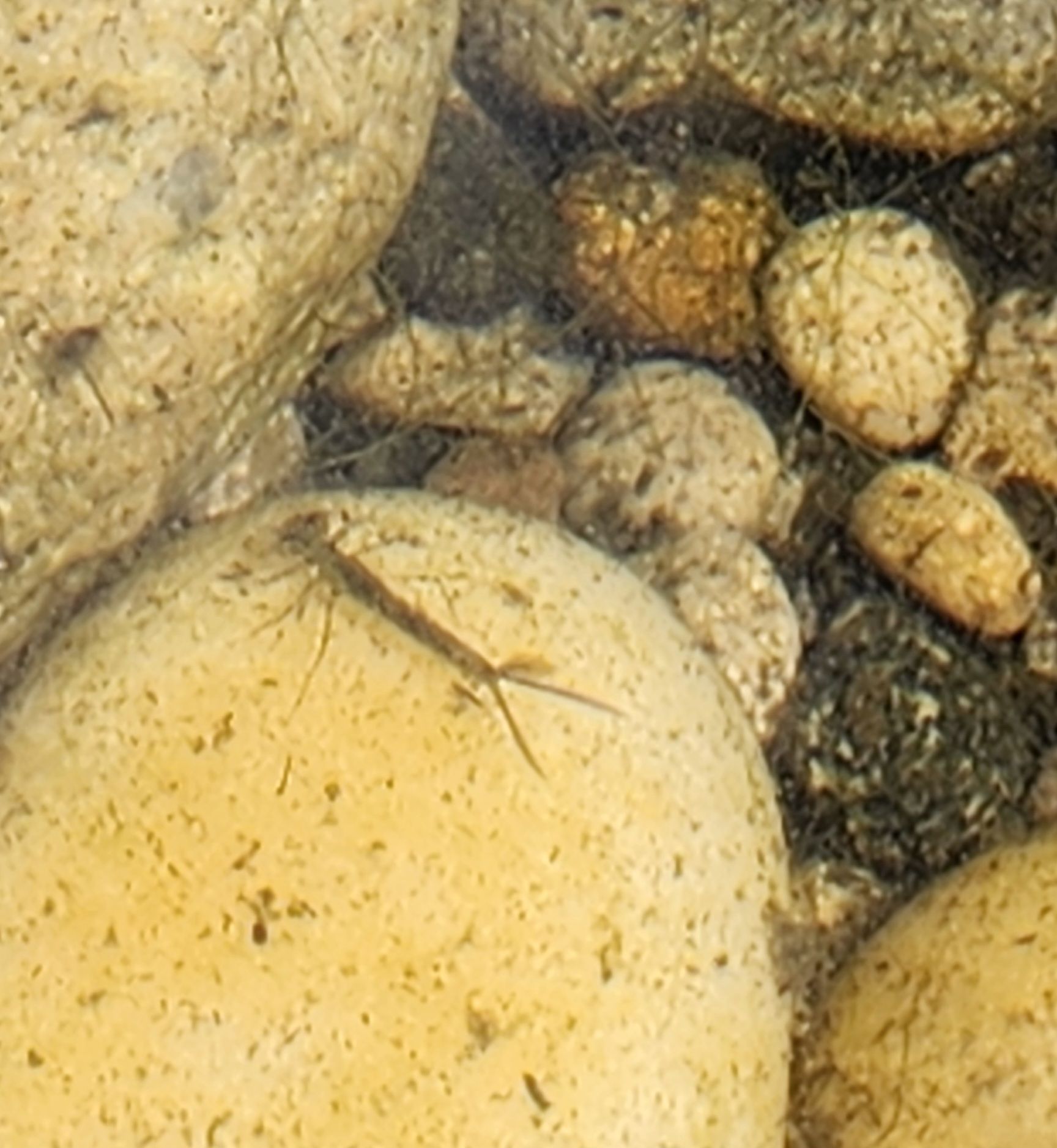
I’ve also seen a few damselfly larvae feeding in the pond this week, so maybe I’ll see some of them emerging yet this summer. This photo isn’t very sharp, but this is one of the damselfly larvae in the pond:

This morning I was co-leader of a bug crawl for members of my local Wild Ones chapter, and I was reflecting on how much my life has changed since I fell in love with insects. Being able to geek out with other people as we stood in a meadow looking at beetles, flies, bees, and butterflies was good for my soul. I needed that camaraderie with like-minded naturalists. It’s funny to realize that if someone had told me 15 years ago that I would celebrate my birthday by watching insects eating my plants, I would have said they were crazy. But here we are, and life is good.
______________________________________________________________
Important note about commenting: Several people have told me that they wanted to leave a comment but were deterred by the box asking for a login or password. It is NOT necessary to log in before leaving a comment. You don’t need a password at all. Just type your comment in the box, then enter your email address and name below the comment box. Nobody but Kim will see your email address. I really love to hear from you, so please consider leaving a note occasionally. Thanks!!
 Nature is my Therapy
you find the coolest insects on your plants! Enjoyed your comments always!
LikeLiked by 1 person
It’s amazing what’s out there if you just take the time to look. I was out at 2:30 this morning with my flashlight and found two of those caterpillars this time! I guess insomnia has its benefits, LOL.
LikeLike
I like your blogs but if I cannot sleep it is a book for me. LOL! 2:30 am could put you in the face of a deer so look out!!
LikeLiked by 1 person
🐝🐜🦗🦟. 🎂
LikeLiked by 1 person
Haha, thanks, Neil!
LikeLiked by 1 person
Happy Birthday, KIm!
LikeLike
I’m just SO impressed at the environment you have recreated. Belated wishes for a happy birthday Kim. Thank you for sharing your passion!
LikeLiked by 1 person
Thanks, Ardys. It’s become a very fulfilling part of my life.
LikeLiked by 1 person
Awesome.
LikeLike