
Have you heard of common ninebark before? Physocarpus opulifolius is a stunning shrub that’s native to much of the midwest and east coast of the U.S. I have several of them in my garden and they’re at peak bloom right now, loaded with gracefully cascading branches of delicate white flower clusters. I planted them five years ago and they’re about five feet tall now and spread about the same width.


When I gave a bug program for my Wild Ones chapter in March, I talked about how one of our primary goals as conscientious 21st-century gardeners is to grow plants that feed the insects and birds. We’re happy to see insects feeding on the flowers, using the pollen and nectar to sustain their own lives. And we even enjoy, or at least tolerate, seeing them feed on the leaves of our plants. A few (or a lot of) chewed up leaves is a small aesthetic price to pay in the name of supporting biodiversity! This is the beginning of a major shift in American perceptions of gardening, and I’m thrilled to see more and more people starting to understand that a flower garden can no longer exist solely for our enjoyment of the beauty of flowers. In a time of massive habitat destruction and precipitous declines in insect numbers, our gardens are the easiest places for us to make positive contributions to the web of life that sustains us all. The natural progression of this mindshift means that — eventually — the tables will have turned, and a pristine garden with no signs of insects eating the leaves will be something to be embarrassed about; everyone will take pride in showing off their gardens full of insects. Can you imagine how wonderful that would be for bugdorks like me?! But I digress….
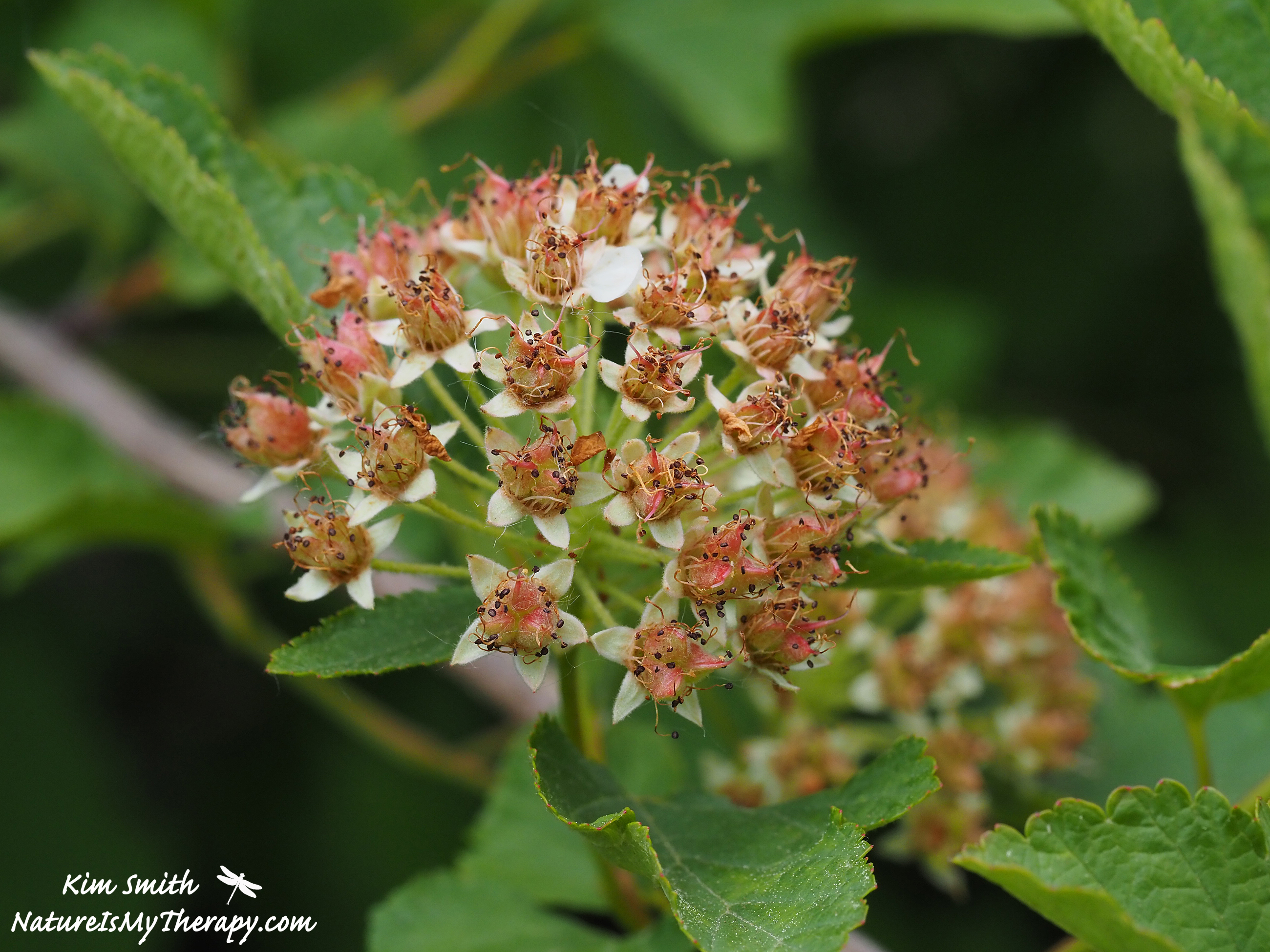
Over the past few years as I’ve watched these shrubs mature, I’ve been dismayed because I could never find any evidence that insects were using these plants. Nobody seemed to be eating the leaves nor did there seem to be much interest from pollinators. But it’s almost like the bugs heard my complaints, because suddenly this year I’m finding lots of insect activity on the ninebarks. Or is it that I really wasn’t paying enough attention before? I don’t know, but I’m thrilled to see them playing a productive role in my garden habitat.
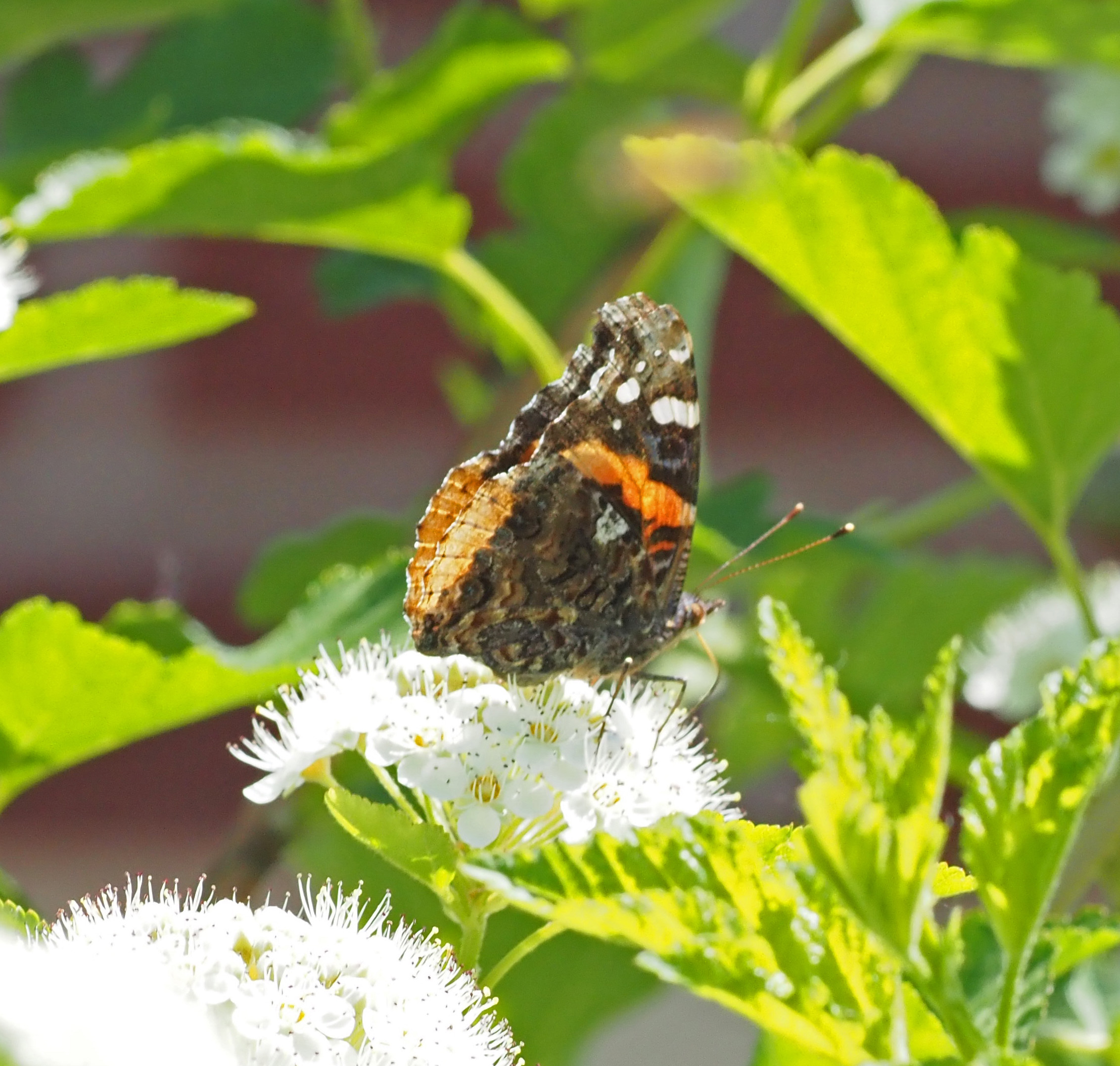
This red admiral butterly spent several days feeding on them.
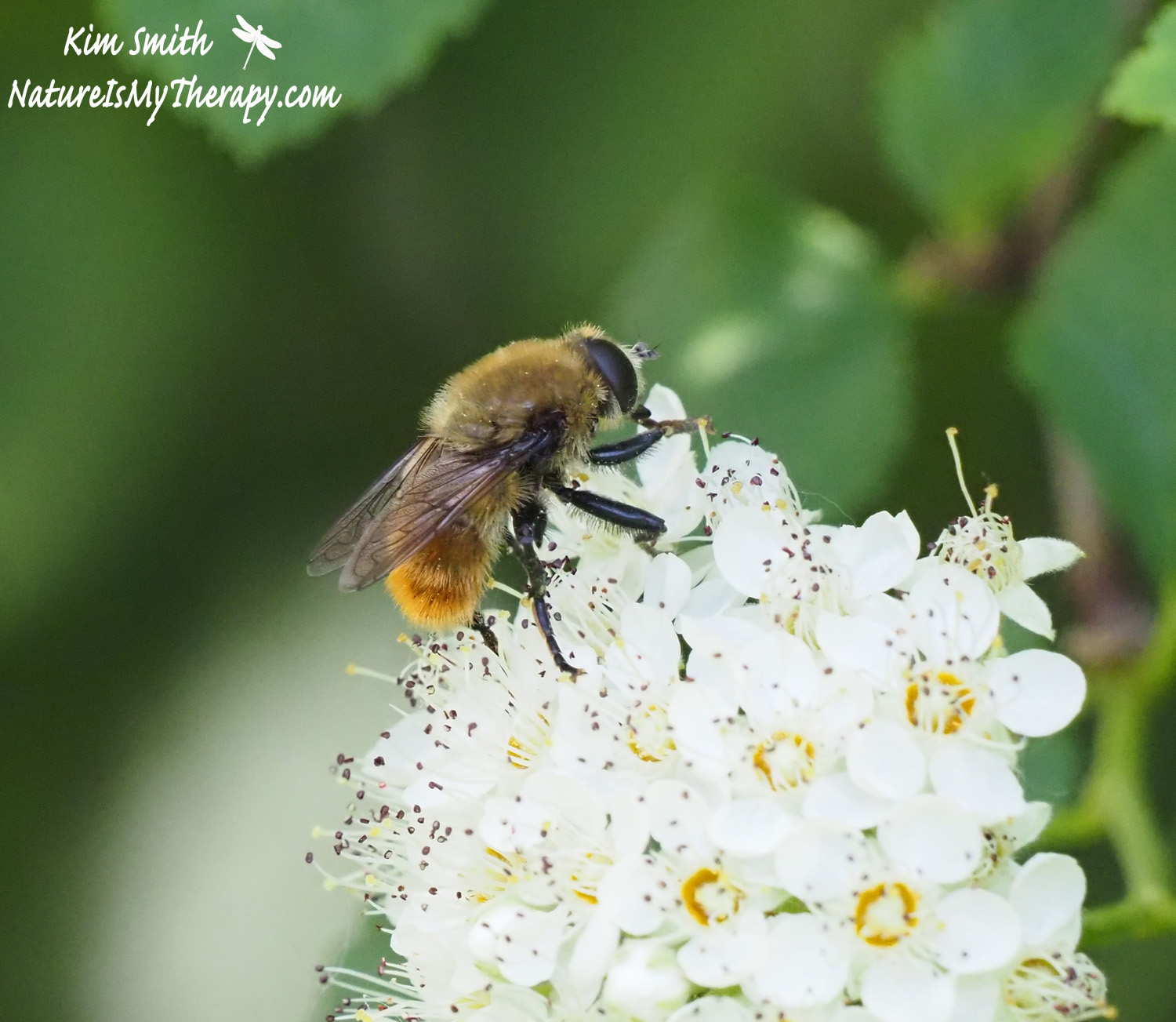
And the narcissus bulb flies are here daily too; they’re a type of hover fly, one of my favorite fly families. This is one of the larger hover fly species, and it’s a pretty good bee mimic, don’t you think?
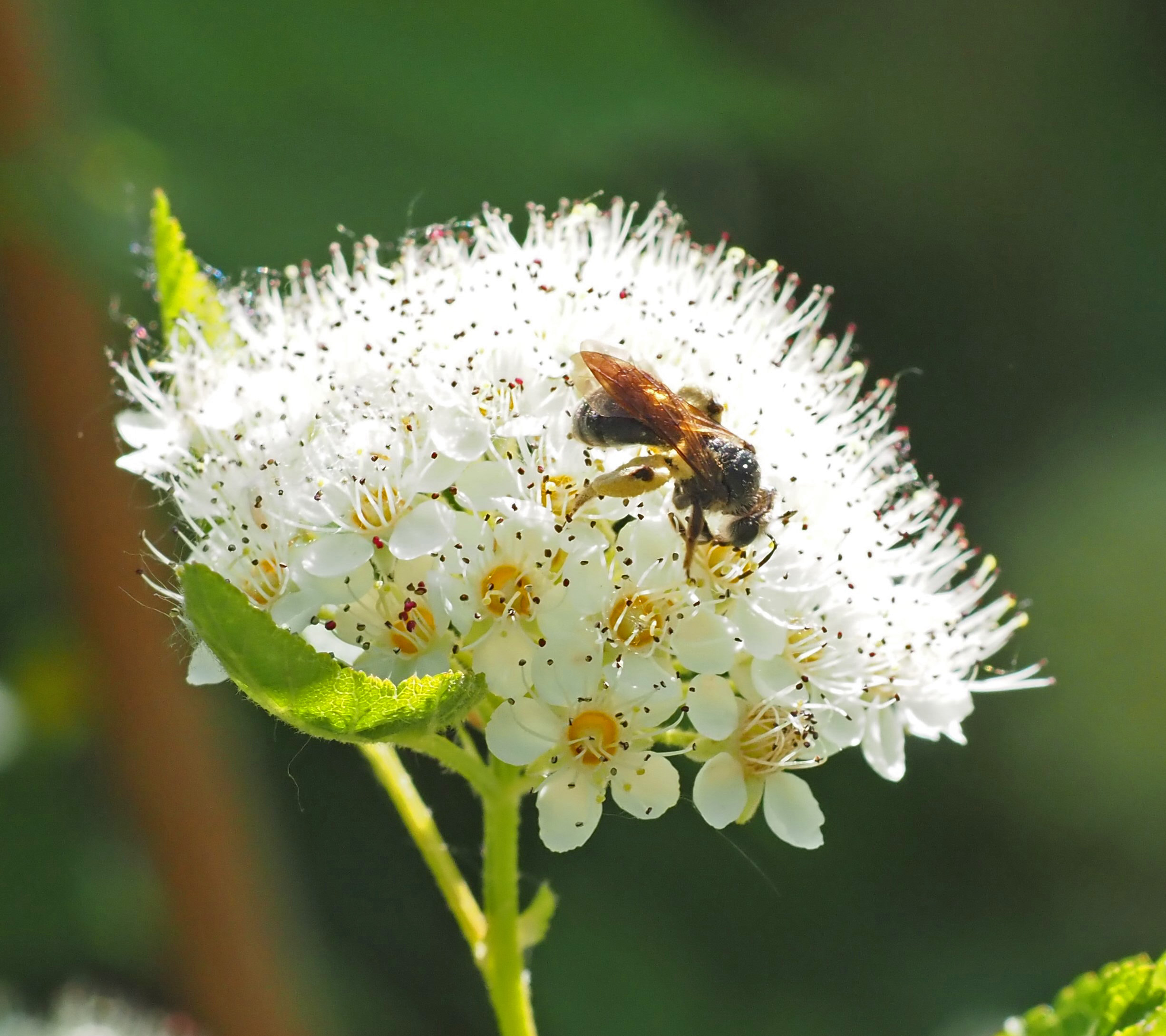
I’ve read that ninebark has special value to native bees, including mining bees like this one. There are dozens of mining bees feeding on my shrubs now. How in the world did I not see them in past years?

The name ninebark refers to the way the stems peel away to reveal multiple inner layers of varying shades of brown, giving this plant plenty of winter interest.

Look at their lovely seed capsules. These persist long after the blooms are gone, and birds will feed on them in winter if you leave them up.

I hope you’ll seek out some native ninebark for your own garden. They can be specimen shrubs or even a gorgeous hedge, beloved by birds as prime nesting habitat. But if you do decide to get some ninebark for your garden, beware of the cultivar forms that have reddish leaves. The Xerces Society has this to say about ninebark cultivars:
One study compared cultivars of ninebark (Physocarpus spp.), which has been bred into dozens of cultivars featuring various shades of red or gold foliage. In the study, ninebark beetles (Calligrapha spiraeae) were fed leaves of the cultivars ‘Monlo’ (deep red foliage) and ‘Dart’s Gold’ (chartreuse colored leaves) vs. the straight species. The beetles showed a strong preference for the regular green foliage and the foliage of the yellow cultivar, and avoided ‘Monlo’. Observers speculate that, because dark red foliage is typically high in anthocyanins, a compound which may be poisonous to herbivores, the beetles avoided the plant. It can be reasonably inferred that the caterpillars and moths that host on ninebark are also avoiding these cultivars, which are widely sold as native and beneficial to pollinators. https://xerces.org/blog/cultivar-conundrum

This last photo shows how some of the branches arch so gracefully. I almost cropped this photo so you wouldn’t see the “lawn” beside this bed, but I’m trying to be honest about what’s going on in my garden, so this is my reality. This is in the rather neglected corner of the garden beside my shed, and I’ve purposely encouraged the violets to continue spreading wherever they want. And they’re no shrinking violets, that’s for sure!
I hope you enjoyed getting to know common ninebark with me!
———————————————-
Important note about commenting: Several people have told me recently that they wanted to leave a comment but were deterred by the box asking for a login or password. It is NOT necessary to log in before leaving a comment. You don’t need a password at all. Just type your comment in the box, then enter your email address and name below the comment box. Nobody but Kim will see your email address. I really love to hear from you, so please consider leaving a note occasionally. Thanks!!
 Nature is my Therapy
Fabulous article and photographs!
LikeLiked by 1 person
Thank you for the intro to ninebark, a plant I’ve seen but never considered I guess. Also learned about the Xerces Society. I find their pollinator-friendly native plant lists very useful.
LikeLiked by 1 person
Glad you liked this one, David. And yes, the Xerces Society has a lot of helpful info on their website!
LikeLike
I learned to love the beauty of ninebark shrubs while living in Idaho, where they grew in the forest. I admit, I hadn’t thought of planting them in my garden, but you’ve inspired me! Great post, Kim, especially the reminder that it isn’t just about what’s pleasing to our human eyes, but mostly about how it contributes to biodiversity and sustainability.
LikeLiked by 1 person
I’m glad you’re inspired, Rebecca! And, truth be told, a garden full of native plants is beautiful, but it’s just a different type of beauty than we’re used to seeing. 🙂
LikeLiked by 1 person
Hi there. I learned a lot from this essay. You have a good understanding of how things fit together.
LikeLiked by 1 person
Thanks, Neil, glad you liked it!
LikeLiked by 1 person
I have a ninebark in my yard but now after reading your article, I’ll have to add a few more! Great job promoting the ninebark! I love your blog.
LikeLiked by 1 person
Thank you, Kathy!
LikeLike