
Since my garden is always a work-in-progress (aren’t they all?), I like to show you how it’s changing from time to time as I continue my native gardening journey. It’s still very early in our growing season in northwest Ohio, but early bloomers are starting to put on their show.


When I bought the house seven years ago, there were three beautiful native redbud trees beside the driveway and I happily planted shade-loving woodland wildflowers beneath them: Dutchman’s breeches, Virginia bluebells, bloodroot, wild ginger, jack-in-the-pulpit, and a few others. Over the years I also transplanted clumps of violets from my lawn into this bed too. But the redbuds slowly died, and I had to remove one of them a couple years ago. This year I made the difficult decision to remove the remaining two that were showing signs of decline.

As you see in the photo below, this bed has turned into a sunny location and most of those shade plants probably won’t survive. And sadly, the only shade in my yard is under two maple trees close to the side street. I’ve been planting trees and shrubs everywhere I can fit them in, but those will take years to get large enough to make substantial shade. This bed looks so barren now, but I’m trying to think of it as an opportunity to go crazy with new plants. I think I’m going to transplant some of my sawtooth sunflowers and ironweed here so I’ll be welcomed home by those cheerful 6-foot beauties every day in August and September. They’ll also provide me with some much-needed privacy from the road here.
I’m eagerly anticipating our annual Blue Week Native Plant Sale so I can grab a bunch of plants for this “redbud bed.” I think I’ll keep calling it that, even though the trees are gone, to commemorate their lives here. (Am I so very weird? Don’t answer that.)

As you can see if you zoom in on the photo above, the native nannyberry (Viburnum sp.) in the center of this bed is already leafing out for its second year here. It should eventually grow to 10 feet wide and tall, but I fear I may not live to see that mature stage.
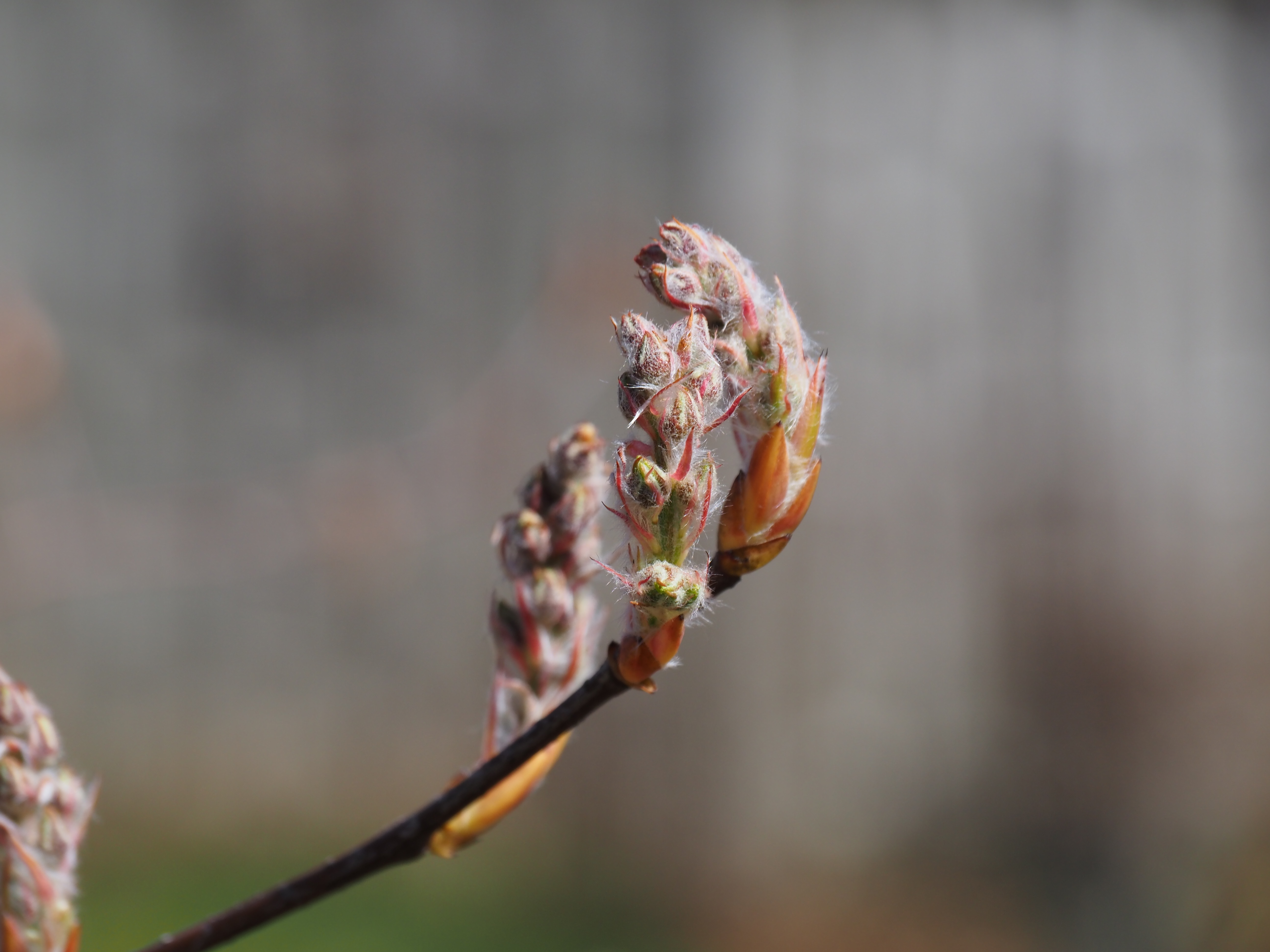
Speaking of leafing out, here are some fresh leaves on other trees and shrubs around the garden:


Pond update: So what’s happening in my pond, you ask? Well, I have some concerns as I see it coming back to life after its first winter. If you remember, I intended this to be a wildlife pond, with a natural vibe rather than a pristine body of water as a showpiece for human eyes. And since I’m hoping dragonfly larvae can live in it, I don’t have a pump, which could suck them into it. So to help circulate the water, I have two floating solar fountains, and I treat it with critter-safe barley extract to help clean the water. As soon as the pond store gets their stock of floating plants, I’ll add those again because they help clean the water too.
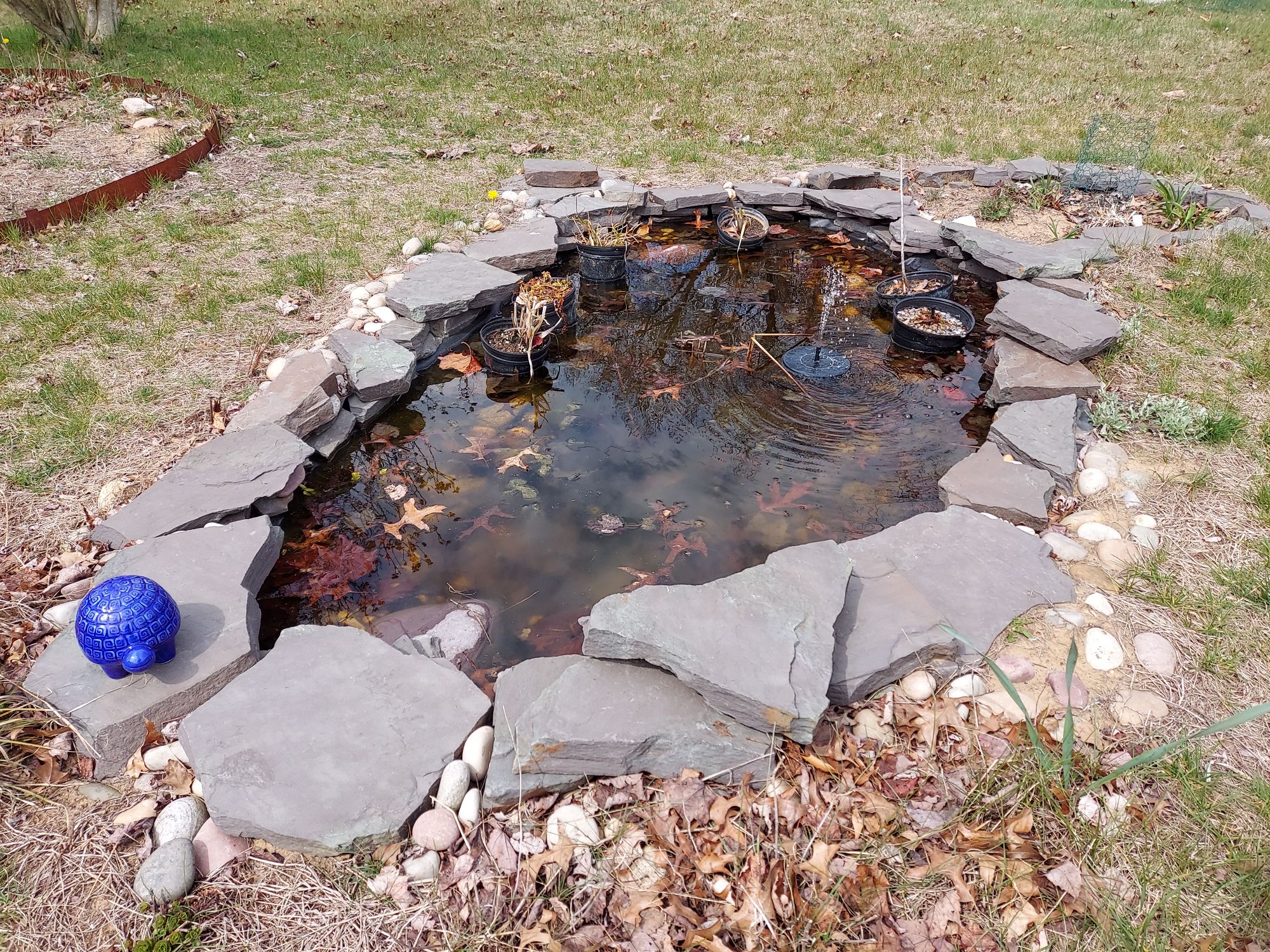
So what are my concerns? I’m sort of embarrassed to show you this picture of how it looks early in the season, but I want to keep it real and be honest about my challenges, successes and failures. So here’s a “sad pond” photo without any floating plants (those are annuals and have to be removed each fall). Right now it has lots of leaves in it, which are contributing to mucking up the water. And there’s a lot of algae. It doesn’t have any odor though, which is a great relief. I didn’t want to put a net over it in the fall to keep the leaves out because I didn’t want any birds or other wildlife to get tangled up in it. I’ve written before about how I “leave the leaves” that fall in my garden so that insects can shelter in them (lots of moths and butterflies, among many others), and so the birds have a bountiful source of insects in winter. And so the leaves from the garden beds continued to blow into the pond during the winter.
I don’t mind the appearance of the leaves in the pond, but I do worry about them messing up the water quality. So I’ve been using my pond net daily to keep scooping out as many as I can. I’m trying to avoid getting into the pond because I don’t want to risk stepping on any dragonfly larvae that might still be alive in there. Sadly, today I found three dead dragonfly larvae floating on the water surface. I don’t know if they died because the water isn’t deep enough to keep them warm, or some other reason. But it makes me feel like a failure. I followed guidelines for a supposedly dragonfly-safe pond, but something seems to have gone wrong anyway.

So I’ve still got a lot to learn with regard to pond maintenance, and a lot of work ahead of me to fill in that barren redbud bed. And to continue removing all the stems from last year’s garden bounty (it’s a ton of work!). But if I can get my confidence back about the pond stuff, I really want to add a second small pond on the other side of the garden, where I can see it from the house more easily in winter. (My friends are daring me to dig a pond without steroids this time!) And I need some shrubs closer to the pond so I can sit there to watch for dragonflies without them being bothered too much by my presence. As I said before, always a work in progress, right? But that’s the fun of having a garden…constant change and opportunities to learn and solve problems. And lest we forget, a free bug playground right outside my door 24/7!

Thanks for stopping by to see how the garden is progressing!
 Nature is my Therapy
It’s funny to read about a gardener wanting more shade. I’m always complaining about my huge Norway maples that make it hard to grow sun-loving perennials and even hostas (they can’t compete with the trees’ surface roots).
You’re right about gardens being works in progress!
LikeLike
Hi Audrey. It seems that we always want what we don’t have, right? I try to be grateful for my sunny garden, but it does make it uncomfortable to sit out there and enjoy it without any shade. And I know what you mean about those maple surface roots! I have two large maples and am constantly tripping over those roots. And these two trees have had so many lower branches trimmed that they don’t provide much shade at all, sadly. Thanks for commenting!
LikeLiked by 1 person
I hope you’ll have patience with yourself and your efforts, Kim. How many times have you had to pull out a bunch of stitches in something you’re knitting? You’re observant and open to learning. You’ll figure it all out. Meantime, I enjoyed reading about how the pond and your landscaping is going. Hope to see that pond this summer when it’s ready for it’s close up!
LikeLiked by 1 person
Thanks for the reminder to be patient, Ginny. That’s not one of my strengths! I’ll definitely invite you over to see the pond in its full glory early this summer. 🙂
LikeLike
Nice writeup Kim and you will have your pond looking good like last year soon. I read about the trees you had to remove and I want to have a cherry tree so bad. Our two streets have them lined up heading to uptown and they are so beautiful. Our city was once a tree city but they cut many down because they do crack the sidewalks. They redid many of our streets so it is a nice little town but even the city has to choose which plants and trees that are right for what they need. Good luck in making your garden nice again. It is so much fun to plant pretty flowers and you have a knack for finding the good ones Kim!
LikeLiked by 1 person