
If you’ve been a subscriber to this blog for a while, you’ve read about my involvement with native plant sales through Wild Ones. Every year we have a big sale in May, and that sale has continued to get bigger each year as the native plant movement spreads and more people begin to understand why they’re important.

Encouraged by the success of the spring sales and the high demand for native plants in our area, we had our first ever FALL native plant sale last weekend. In addition to our primary plant supplier, the amazing Blue Creek Native Seed Nursery, we invited several small local growers to participate as well. It’s our way of supporting small businesses and ensuring that there are enough sources of native plants locally. In addition, the students at the University of Toledo provide us with plants from their GUTS program (Greening UToledo Through Service Learning). Our Wild Ones Oak Openings Region chapter receives one dollar per plant sold, with all the rest going back to the growers. I think it’s a fantastic deal for them. We organize the whole thing and our members work as volunteers to sell their plants. It’s a win-win situation: We win because it serves our mission of getting more native plants in the ground, and they win by earning money to continue growing natives.

Knowing that some of the plants would be showing signs of entering dormancy at this time of the year, we worked hard to educate our customers about the value of a healthy root system, and explain that they weren’t buying the top-growth, but rather the root system for next season. We also taught them the benefits of planting in the fall, giving the plants a head start going into next year’s growing season.

Our spring sales are two days long, but our fall sale was just one day. And it turned out to be a gray day with occasional showers and a cold wind. As expected, there was less foot traffic for this sale, but we were nevertheless pleased with the number of plants and seed packets that we got out into our community once again. I think we’ll continue to tweak our marketing and education efforts and try the fall sale again next year.
My primary job during the actual sale days is to supervise our cashiers and other volunteers, but I have plenty of time to roam around and answer customer questions as well. The first few times I worked a plant sale I didn’t think I knew enough to answer plant questions, but it turns out that you have to just jump in and do the best you can. And there are always other more-knowledgeable people around to help me if I get stuck. After six years of native gardening at home, I’m more confident about that part now, and I have some rewarding conversations with people as they shop.


There’s one particular person who stands out from this event, a woman who came in looking uncertain. I walked up to her and started giving her my standard “welcome to our sale” talk, and explained how to find and choose plants, and she said “I don’t know anything about native plants.” Apparently her neighbor had talked to her about them enough to arouse her curiosity, and so she just showed up to take a look around. At this point I backtracked a bit and gave her a quick tutorial about native plants. As I explained about their deep root systems and how they need less watering and store more carbon, and how they feed the insects and birds much better, her face lit up and she got excited. That moment will stick with me for a long time. She grabbed a shopping bin and I connected her with one of our other volunteers to help her pick some plants. She left the sale with a half dozen plants and a great deal of enthusiasm, and I’m still smiling as I remember that encounter.
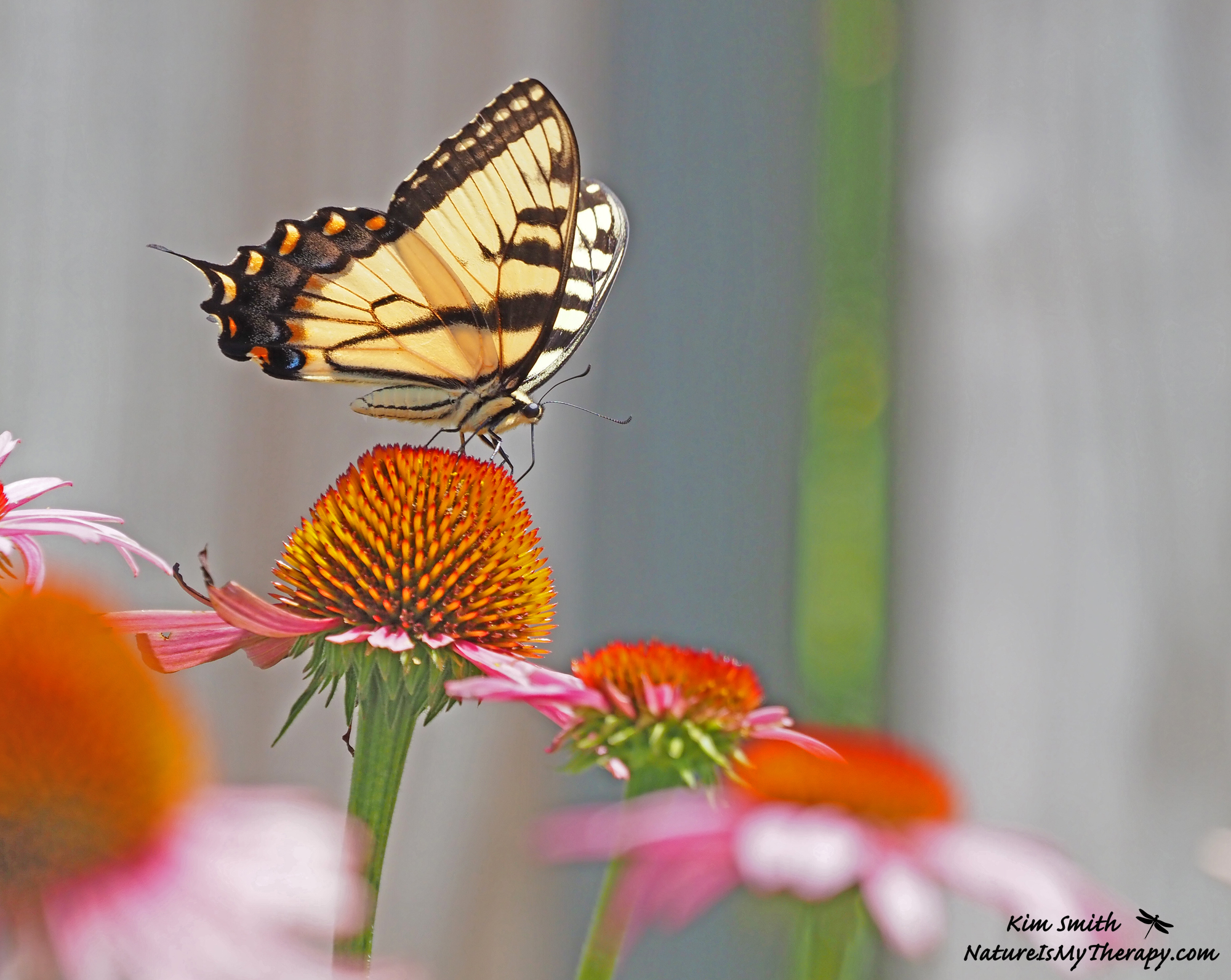
I often think that if I could have another lifetime I’d choose to spend it as a teacher because I get enormous satisfaction from seeing the lightbulb come on when someone grasps a new concept or way of doing something. That’s a moment that enriches both lives at the same time, isn’t it? I’m not sure why the teaching career path didn’t occur to me earlier in life, but I’m making up for that missed opportunity now by using my writing to teach about native plants and insects. I strongly believe that if more people took the time to learn about the key relationships in the natural world, we’d all be better off. I still remember the moment I learned that many insects can only eat certain plants; that changed the world for me. It upended my view of gardening and I now choose plants mostly because they’ll benefit the insects and other wildlife, rather than because they’re pretty to human eyes.

Plants ARE birdfeeders!
In this time when insects and birds are declining partly because of habitat loss, our gardens need to be beneficial parts of the ecosystem, supporting life rather than serving simply as pretty things for us to look at. It feels right to actively share “my” property with the non-humans who are also entitled to live their lives here. I try to remember that they were here before us and they’ll be here after we’re gone. Truthfully, it’s more “their” property than it is mine.
And as I saw this weekend, all it takes to pique a neighbor’s curiosity is to talk to them about your native garden. They might roll their eyes at you the first time (been there, done that), but if you keep up your gentle efforts to educate, you could turn on that lightbulb for them too.

Notes:

If you want to learn the basics about native plants and how they’re important to wildlife, I recommend you start with Doug Tallamy’s book, “Bringing Nature Home.” This is the book that started me on my journey.
 Nature is my Therapy
I was a teacher for 38 years. Those moments were the point of everything!!!!
LikeLiked by 2 people
I believe it! What did you teach?
LikeLiked by 1 person
Writing… ❤️
LikeLiked by 1 person
Oh yeah, I knew that! One of my favorite subjects. ❤
LikeLiked by 1 person
You would have been the one kid in my class who raised her hand when I asked, “Who likes writing?” ❤️
LikeLiked by 1 person
You’re doing good work, and you’re spreading the word.
LikeLike
Thanks, Neil!
LikeLiked by 1 person
It made me smile to read your description of teaching someone about native plants. Your photos are beautiful as always. Keep up the good work, I’m sure you are making a difference.
LikeLike
Thanks, Ardys. I get the same feeling when I’m able to teach people about bugs! I’ve actually volunteered to do a bug program for my Wild Ones chapter next spring. I hate public speaking, but my desire to teach is pushing me to get past that. Funny, isn’t it?
LikeLiked by 1 person
Your beautifully sweet and sun-shiny photos – are my therapy – on this chilly autumn evening. Thank you dear Kim .
LikeLiked by 2 people
Thank you for your good work, Kim! Beautiful photos! Cindy 🙂
LikeLiked by 1 person
Thanks, Cindy!
LikeLike
I love win-win-win (nature (which you protect and nurture), me (all that I learn from you), and you (your satisfaction in what you do).
LikeLiked by 1 person
Thanks, Ginny!
LikeLike
Love the photos and comments and I think you would have been a good Teacher. I like the beautiful insects on the flowers that you took!
LikeLiked by 1 person
I think it would have been fun to teach middle school kids, but not high school. The older kids would wipe the floor with me!
LikeLike